
The rules
And when to break them

About a century ago I used to work in a commodity trading office in New York. There were traders and accountants and back office people managing the logistics of bringing cocoa beans into the US, warehousing them and shipping them off to customers like Mars and Nestle.
All of the hedging and physical trading was done in compliance with the rules of the Cocoa Merchants’ Association of America and ICE, the futures exchange. Part of this work involved grading the cocoa that arrived in the US to ensure it met the exchange’s quality specifications. This was because unscrupulous traders used to substitute say Ivory Coast beans for Ghana beans because they were cheaper, or fill a container with underfermented beans or fill bags with waste etc. Those days are largely over, since the trade has shrunk to just a few key players and some johnny come lately that shows up with a few bags of beans is generally treated with suspicion.
Anyways.
So a bunch of cocoa graders would go down to the futures exchange every week or so and grade cocoa for a small fee, and from what I gather, sit about and share information (or as I would put it, gossip) and then go back to the office.
To become a cocoa grader, you had to pass a test. No, I never even wanted to be a grader (as I had enough gossip going on anyway), but one of the guys in the office did. By the time I left New York, he’d failed the test a few times. Nothing wrong with that.
Part of the test was to identify cocoa beans by origin, to stop the substitution problems I detailed above. Every origin had a look. Ghana beans looked like Ghana beans, New Guinea beans had a choking acrid, acidic smell that drove me out of a warehouse in New Jersey one day. Ecuador beans look like Ecuador beans.
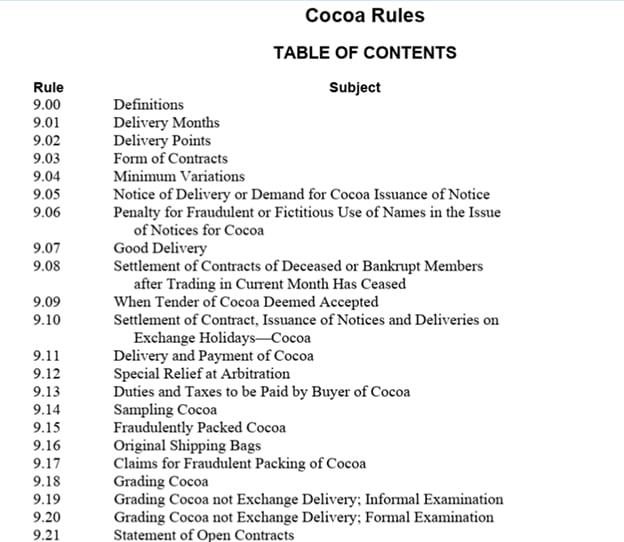
Now I’m growing and fermenting beans in Belize, I can’t even tell you what batch they are just by looking at them. I’m pretty sure of the country of origin since I know where I am, but every couple of months I look back at my trading days and shake my head. Cocoa truly was an interchangeable commodity, with premiums and discounts for different origins but since they were all tossed in together at the port of origin, all the distinctive regional flavors got obliterated. That was the whole point, so the Hershey’s bar tasted the same every month of the year.
One of our many “projects” at the farm is to dig deeper into terroir. How does what we do to the soil affect the final flavor of our chocolate? This is going to take us many years to disentangle, but a lot of the motivation goes back to our commodity trading days. If you’ve been up country in Nigeria, this is what you see. How could that starving, diseased tree possibly be the start of a tasty chocolate bar?
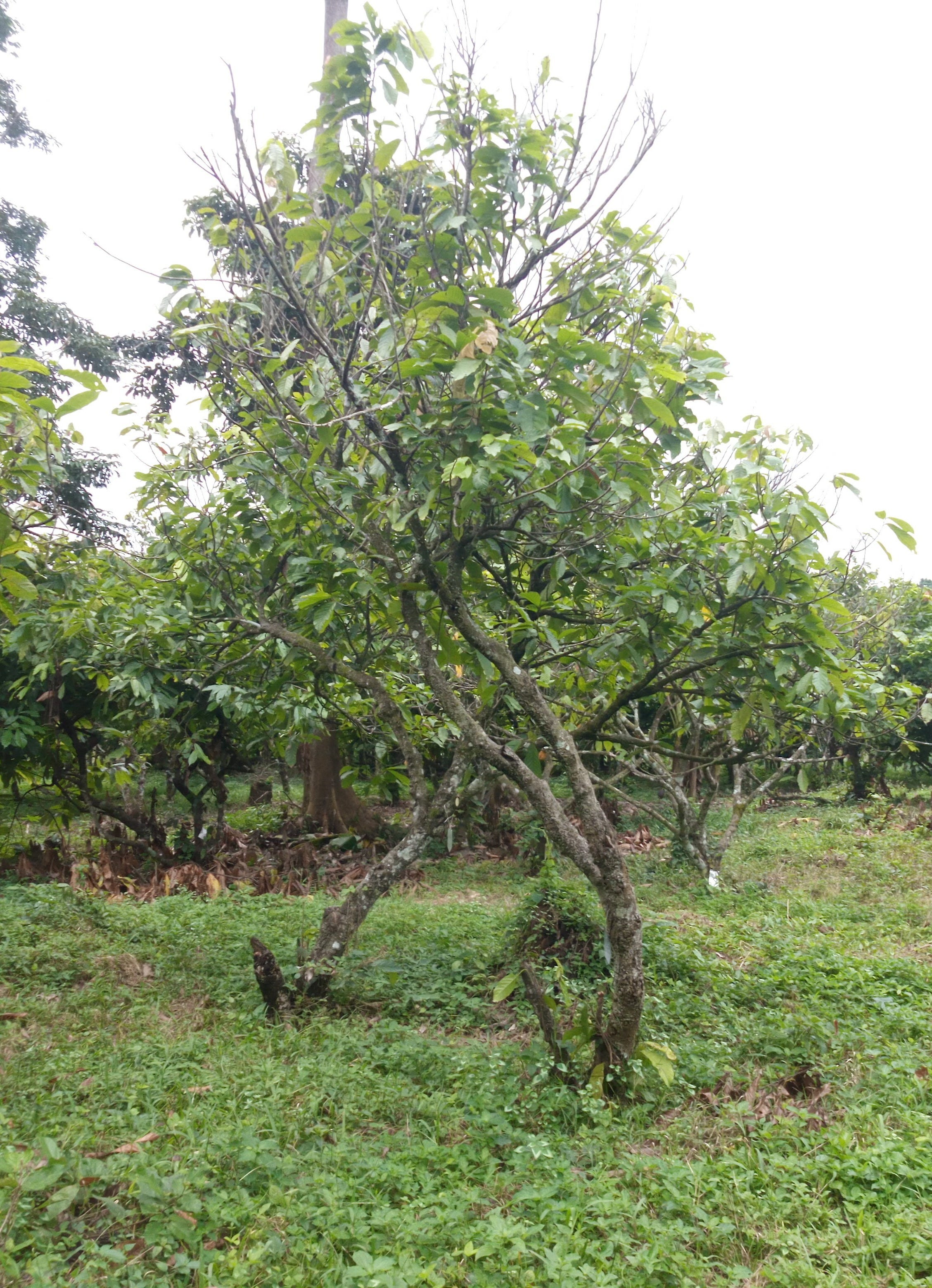
At the other end of the spectrum, I’ve seen cocoa like this in Belize, Ecuador and Indonesia.


It can’t all be about genetics, since when I took these photos, nobody knew what the genetics were (maybe they do now but I doubt it). And this is just looking at things through a yield lens (very important to farmers), not flavor (very important to customers and chocolate makers).
Our theory is that soil biology, climate, plant nutrition and soil structure have critical roles to play, and are just as important as genetics, fermentation, roasting and a host of other factors. All of the secondary compounds that plants use to signal pollinators and repel pests and attract seed dispersers are not well understood, and we know little about how they are created and how they affect flavor.
This is the basis of our Soil to Soul ethos which we are launching over the next few weeks along with our new packaging. I’ll try to break it down a bit more as we blunder up a bunch of dry gullies and have the odd breakthrough. Somehow, I doubt it will be a talking point in the grading room at the futures exchange.
I’ve seen trees with stunted growth and leaves that look burned or insect damaged really recover once we focus on soil biology. When we apply bokashi and use worm tea as a foliar, the trees bounce back, the masorcas grow larger, and the quality of the cacao improves. It’s convinced me that it really does begin in the soil.
Awesome story Ruth :)